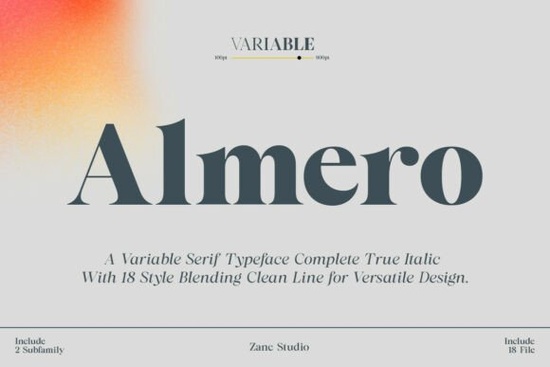
When you need a serif that can shift personality without changing fonts, a variable typeface like the Almero Serif Family Font becomes a real workspace asset. It is a variable display serif by Zane Studio, built around a sharp, transitional skeleton and an unusually wide weight axis that runs from a delicate 100pt hairline to a commanding 900pt black. The design keeps a clean, high-contrast rhythm between thick vertical strokes and whisper‑thin horizontal bars, while open counters and neat serifs let it sit comfortably in both high‑fashion headlines and strict corporate wordmarks. Because it ships as a single variable file plus an italic sub‑family, you get 18 style‑blending points without installing a dozen static files.
What exactly is a variable serif like Almero?
A variable font bundles multiple weight, width, or slant masters into one file, then lets software interpolate any instance along those axes. For Almero, that means you can slide from Hairline 100pt to Black 900pt without ever leaving your font menu. This is especially useful when you’re working on responsive website headers or motion‑design prototypes, because a single CSS file handles all states. The italic companion works the same way, so you can fine‑tune emphasis without breaking optical size consistency. If you have never used a variable font, think of it as a complete family packed into a single efficient file.
Why does the weight range matter for editorial layouts?
Magazine art directors know that a masthead, a lead deck, and a photo caption each need a slightly different visual weight. With Almero, the 100pt to 900pt span means you can use the same typeface across the entire page while maintaining a clear hierarchy. At the lighter end, the hairlines feel airy and refined, almost like a high‑end cosmetic label. At the bolder end, the thickened verticals become a confident anchoring device for logos or all‑caps navigation. Because the interpolation is smooth, you can even dial a custom weight for a brand guide and keep it consistent across every application.
Which design projects benefit most from Almero?
Almero leans toward display use: magazine title spreads, luxury packaging, website hero sections, and boutique hang tags. Its high contrast and thin serifs look best at sizes above 14pt on screen or 12pt in print. If you run a small stationery shop or a POD store, this font works beautifully on wedding invitation suites, foil‑stamped business cards, and gift box inserts. I’ve also seen crafters use the lighter weights for elegant vinyl decals and sublimation mug designs because the clean counters stay readable even after heat transfer. For a slightly softer look that still holds that editorial tension, you can explore a similar serif with rounded bracketing to compare how structure changes the mood.
How does Almero compare to other premium serifs?
Designers often put it alongside sharp transitional serifs like Giteral or Velique. Both of those share a similar vertical contrast, but Giteral adds a touch more width and softer terminals, making it a touch friendlier for body copy snippets. Velique tends toward a slightly tighter aperture, which gives it a denser texture in multi‑line headlines. Santhie, on the other hand, modulates its stress more diagonally, offering a warmer, old‑style flavor that contrasts nicely with Almero’s cooler, upright axis. Lyte Serif introduces even more flared terminals, moving further toward a statement display face. The choice really comes down to how much crisp geometry you need. Almero stays the most structured of the pack.
For a technical deep‑dive into the full glyph panel, you can also check the detailed character set and licensing notes.
Can I use Almero for logo and brand design?
Yes, and that’s one of its strongest suits. The variable weight axis means a brand can logotype in Bold 700pt and then use Light 300pt for taglines, all from the same family. The italic sub‑family gives a realistic, optically‑correct slant not a mechanically skewed roman so it reads as intentional and premium. If you’re building a visual identity for a skincare line, a boutique hotel, or a fashion editor’s portfolio, Almero gives you a single, manageable license covering a wide spectrum of expressions. Just remember to check the end‑user license for logo usage; Creative Fabrica’s standard commercial fonts usually allow it, but always confirm for trademark situations.
What file formats and OpenType features are included?
Almero ships as OTF/TTF variable files plus static instances if you prefer to work traditionally. Inside the variable builds, you get the full weight continuum, while the italic files carry that same axis for slanted styles. OpenType features include standard ligatures, oldstyle and lining numerals, fractions, and case‑sensitive punctuation. These small touches make a big difference when you’re setting numeric‑heavy editorial content like price lists or data‑driven branding. The clean vertical metrics also help the font sit evenly across different design tools Figma, Illustrator, Affinity Publisher, and Procreate all handle the variable version without much fuss.
How do I pair Almero with other fonts?
Because Almero is highly vertical and high‑contrast, it pairs best with low‑contrast sans‑serifs or monoline scripts. A geometric sans like Inter or Poppins holds its own while keeping the focus on Almero’s delicate serifs. For a more humanist reading experience, try Montserrat or Work Sans the open apertures echo Almero’s own roomy counters. If you add a script for accent words, stick with an upright brush‑style script rather than a heavily slanted one, so the angles don’t compete. Use Almero for main headings, the sans for body, and maybe one handwriting font for call‑out prices or product names three fonts max to keep the design polished.
For further reading on how variable fonts reshape print design, I found this Almero Serif Family comparison to established type systems helpful in understanding where a variable serif sits in a professional toolkit.
A quick checklist before you download Almero Serif Family
- Confirm the license covers your intended use (POD, logo, web embedding).
- Test the weight axis in your design software drag the slider from 100pt to 900pt to see how it behaves in your exact headline sizes.
- Check the italic slant angle; it’s true italic, not an oblique, so it will have different character shapes perfect for emphasis but worth previewing.
- Pair with simple sans‑serifs first, then layer in decorative elements if needed.
- Keep anything under 12pt in mind at very small text sizes, the hairlines may get fragile, so reserve this beauty for medium to large display roles.
- Download both the variable and static files if your older apps don’t support variable fonts yet.
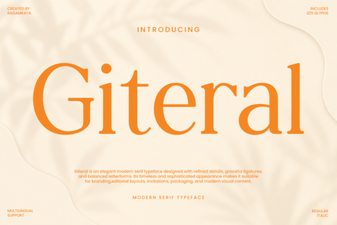 Giteral Font: Fresh Typography for Designers
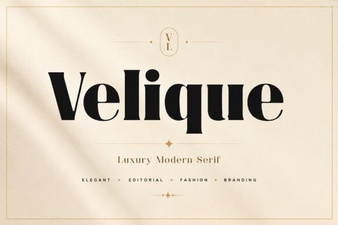 Velique Font: Elegant Serif Typeface for Creatives
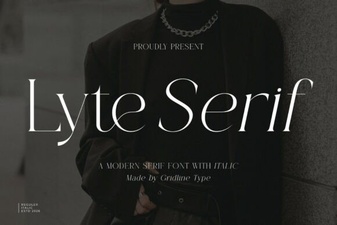 Discover Lyte Serif Font for Clean, Modern Typography
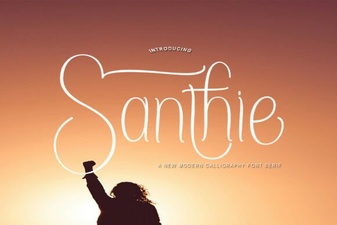 Santhie Font: Modern Typography for Web & Print
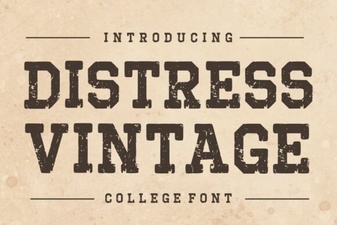 Distress Vintage Font: Creative Projects & Design Inspiration
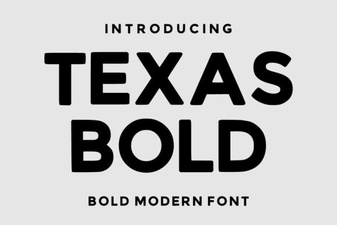 Texas Bold Font: Creative Uses and Design Inspiration